
Look, we need to talk.
You've been drawn to Yoruba spirituality, maybe through your abuela's whispered prayers, your Cuban neighbor's altar, or that pull you feel when you see cowrie shells. But here's the thing: there's a difference between being called to this path and actually walking it with respect.
Too many people are stumbling through Orisha practice like they're playing spiritual dress-up, and honestly? Our ancestors deserve better. Your spirit deserves better. You deserve better.
So let's get real about the five mistakes that are keeping you stuck, confused, and honestly, potentially disrespecting traditions that have kept our people strong for centuries.
Mistake #1: Treating Orishas Like Christian Saints (They're Not)
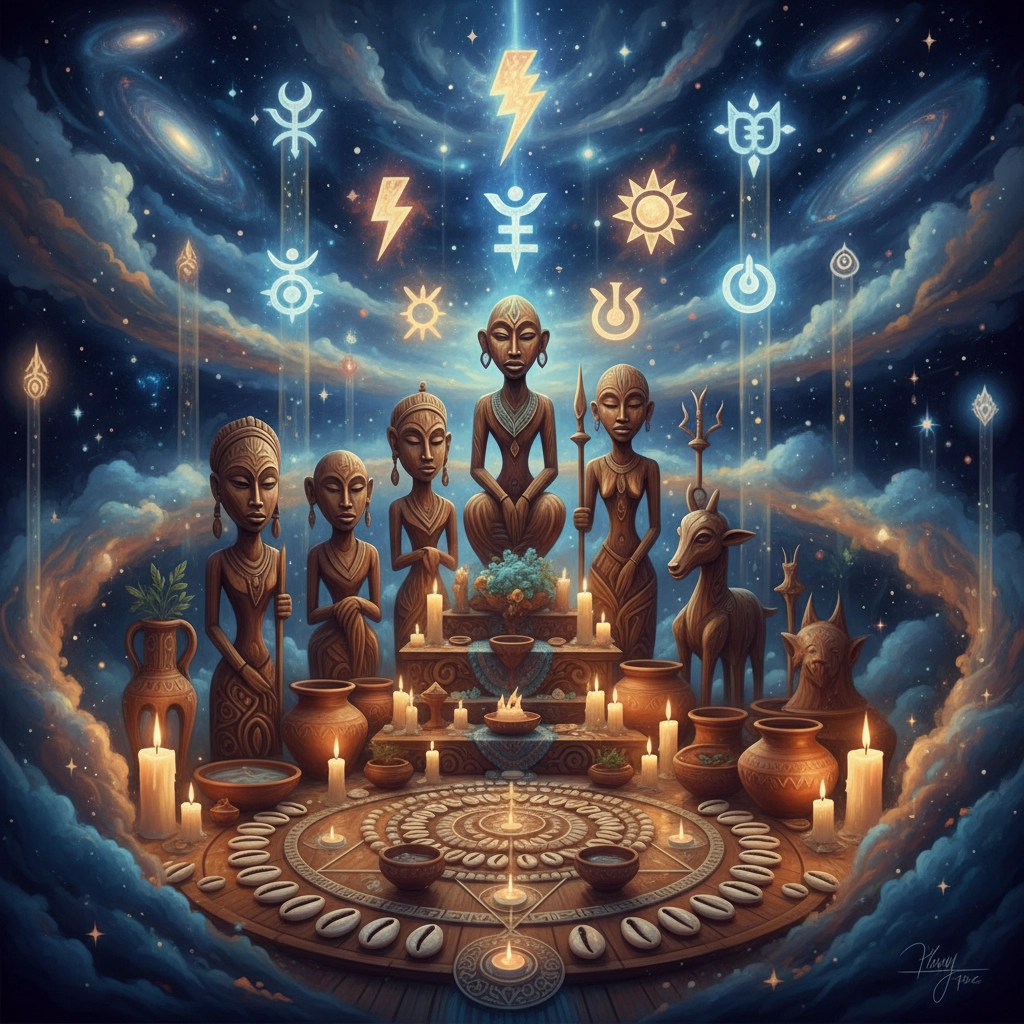
This is where a lot of folks trip up right out the gate. You walk into someone's house and see Changó's red and white colors, and suddenly you're thinking, "Oh, this is like Saint Barbara."
Stop. Right. There.
The Orishas aren't Christian saints in African clothing. They're not intermediaries you pray to like you're sliding into someone's DMs hoping they'll put in a good word with God. That's colonized thinking, and it's time to let it go.
Here's what's actually happening: You're honoring the Orishas. You're acknowledging their ashé, their divine energy and power. But ultimately? You're working with them to connect with Olódùmare, the Supreme Source. Think of it like this: the Orishas are the rivers, but Olódùmare is the ocean.
When you approach Yemayá's altar, you're not worshipping her, you're recognizing the divine feminine energy of the ocean mother who birthed all life. You're asking for her guidance, her protection, her wisdom. But the reverence, the ultimate worship? That flows to the Source of all things.
This isn't idol worship, no matter what anyone told you growing up. This is sophisticated spiritual technology that your ancestors developed over thousands of years.
Mistake #2: Your Altar Looks Like a Spiritual Yard Sale
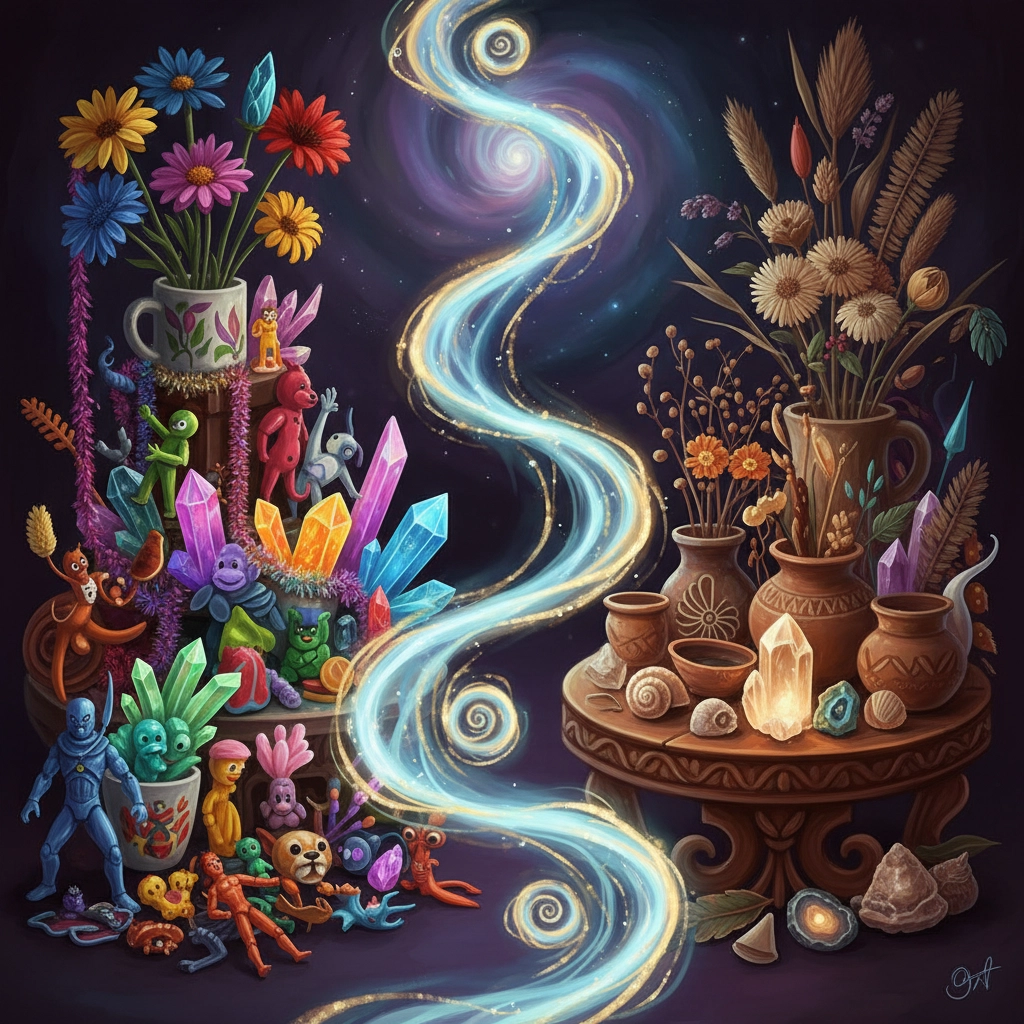
Let's be honest about your altar situation. Are you throwing random crystals from Amazon next to a plastic Yemayá statue you got from the botanica, with some incense you grabbed at the corner store?
Child, no.
Your altar isn't Instagram decor. It's not a vision board with candles. It's a sacred space where you commune with divine energies that have been moving through your bloodline since before your great-great-grandmother was even born.
Here's what you need to know:
Use natural materials. Wood, clay, shells, stones. If Changó lived in the forest and commanded thunder, why are you honoring him with plastic? Your ancestors worked with what the earth provided, follow their lead.
Don't mix energies that clash. You wouldn't put Ogún (iron, war, work) right next to Oshún (honey, love, rivers) without understanding how they relate. Some Orishas work beautifully together; others need their space. Do your homework.
Maintenance is everything. That water you offered to Yemayá three weeks ago? It's not "seasoning", it's disrespectful. Change it regularly. Clean your altar space. Keep it sacred, not stagnant.
Your altar should feel alive, not like a museum display. It should hum with energy, not collect dust.
Mistake #3: You're Approaching This Like You're Window Shopping
I see you. Walking up to the altar casual as you please, phone in hand, thinking about your grocery list while you light that candle.
This isn't Starbucks spiritual. This isn't casual Friday with the ancestors.
When you step into sacred space, whether it's your altar, a ceremony, or even just putting on your eleke (beaded necklace), you're entering into relationship with forces that shaped civilizations. That demands presence. That demands respect.
Before you even touch that candle, center yourself. Acknowledge where you are and who you're calling upon. I don't care if your Yoruba pronunciation isn't perfect, speak from your heart, but speak with reverence.
Some of y'all are treating this tradition like a spiritual buffet: "I'll take some prosperity from Oshún, some protection from Elegguá, and can you make that protection extra strong?"
No, beloved. This is relationship, not takeout.
You want to know why your prayers feel like they're bouncing off the ceiling? Because you're approaching ancient wisdom with modern entitlement. Slow down. Show up. Be present.
Mistake #4: You Think Ifá Is Your Personal Psychic Hotline
Here we go with the fortune-telling fantasies.
"When will I meet my soulmate?" "Should I quit my job?" "Will I win the lottery?"
Listen, Ifá is not Miss Cleo. It's not a crystal ball, and it's definitely not your personal advice column.
Ifá is a comprehensive spiritual guidance system that's been helping people understand their destiny (orí) and navigate life's complexities for thousands of years. It's philosophical wisdom, spiritual counseling, and divine guidance rolled into one sophisticated practice.
When you go to a competent babalawo or iyanifa for a reading, you're not just getting predictions, you're getting insight into your soul's purpose, understanding about obstacles on your path, and guidance for spiritual development.
The questions you should be asking? "What do my ancestors want me to know?" "How can I fulfill my destiny?" "What spiritual work do I need to do?"
Stop trying to use ancient wisdom to hack your way out of doing the inner work. The Orishas will tell you what you need to hear, not necessarily what you want to hear.
Mistake #5: You Think All Yoruba Practice Is the Same

This one's big, and it affects how you understand everything else.
Not every person of Yoruba descent practices the same spirituality. Not every botanica follows the same traditions. Cuban Santería isn't exactly the same as Brazilian Candomblé, which isn't exactly the same as traditional Yoruba practice in Nigeria, which isn't exactly the same as 21 Divisions in the Dominican Republic.
These are related traditions, branches on the same tree, but they've developed differently based on history, geography, and the experiences of the people who carried them forward.
Your Puerto Rican madrina learned differently than your Nigerian babalawo, and that's okay. What matters is finding authentic instruction and understanding the lineage you're working within.
Don't try to mix and match practices from different traditions like you're making a spiritual smoothie. Find good teachers, learn one system well, and honor the specific way it's been passed down.
And please, please, stop assuming that because someone is from West Africa or the Caribbean, they automatically know about Orisha practice. That's like assuming every Italian person knows Latin because of the Catholic Church.
So What Now? Your Next Steps
Ready to course-correct? Here's how we move forward:
Start simple. Set up a clean, respectful altar space using natural materials. Offer fresh water daily. Light white candles. Say good morning to your ancestors and the Orishas.
Find authentic teachers: people who can trace their lineage and who approach this work with the reverence it deserves. Check out our classes at Ejiogbé IFA Institute if you need guidance.
Read everything you can get your hands on, but remember: books teach you about the tradition, but proper initiation and mentorship teach you how to live it.
Most importantly? Listen. Your ancestors are trying to guide you, but they can't get through if you're too busy performing spirituality instead of practicing it.
This isn't about perfection: it's about respect, relationship, and real spiritual development. You've got this, but you've got to do the work.
The Orishas are waiting, but they're not waiting forever. Your ancestors already know what you're capable of: the question is, when will you?
Ashé.