
You know that feeling when you're walking through a forest and suddenly you encounter a tree so massive, so ancient, that it stops you in your tracks? That's Aragba for you: the sacred Ceiba tree that our Yoruba ancestors knew as the ultimate bridge between worlds.
Let's talk about this giant. When we say Aragba (Ceiba pentandra), we're talking about one of the most spiritually significant trees in African cosmology. This isn't just some pretty plant for your Instagram feed: this is serious ancestral business. The Ceiba can tower up to 70 meters high, with a trunk so wide it takes multiple people holding hands to embrace it. But here's what your botany textbook won't tell you: Aragba is where the physical and spiritual worlds shake hands.
The Great Connector: Why Aragba Commands Respect
In Yoruba cosmology, trees aren't just oxygen producers: they're living temples. And Aragba? She's the cathedral. This sacred tree serves as a portal between the earthly realm (Ayé) and the spirit realm (Orun). Think of it as nature's own spiritual highway system.
Our ancestors understood something that modern folks are just catching up to: certain trees hold frequencies that allow for easier communication with the spirit world. Aragba, with her massive root system extending deep into the earth and her crown reaching toward the heavens, literally embodies the connection between all three levels of existence.

The spirits: our Orisa, ancestors, and other entities: use Aragba as a meeting place, a resting spot, and sometimes a permanent residence. You don't just walk up to one of these trees casually. You approach with reverence, because you're entering someone's home.
Sacred Symbolism: What Aragba Represents
When you look at Aragba, you're seeing a living symbol of several key spiritual principles:
Ancestral Portal: The massive trunk and buttress roots create natural altars and gathering spaces where the veil between worlds is thinnest. This is where serious ancestor work happens.
Protection: Those thorns on young Ceiba trees? They're not just for keeping animals away. Spiritually, they represent the protective energy that surrounds sacred spaces and practices.
Community Hub: Just like the tree provides shade for entire communities, Aragba represents the center of spiritual community: where knowledge is passed down, rituals are performed, and collective healing takes place.
Transformation: The tree's ability to shed its spiky armor as it matures mirrors our own spiritual growth. We start protected but prickly, and through wisdom, we become strong enough to offer shelter to others.
Ritual Uses: How We Work with Aragba
Now, before you start planning your next ritual under the nearest Ceiba, let me be clear: this work requires respect, knowledge, and often guidance from experienced practitioners. But here's how Aragba traditionally fits into our spiritual practices:
Offerings and Altar Work: The base of an Aragba becomes a natural altar space. Traditional offerings include white flowers, honey, palm wine, kola nuts, and sometimes white cloth tied around the trunk. The tree appreciates consistency: if you start leaving offerings, keep it up.
Initiation Ceremonies: Major spiritual initiations often take place near or under Aragba trees. The tree's energy supports transformation and spiritual birthing. Many traditional priestesses and priests receive their final consecration in the presence of these sacred giants.
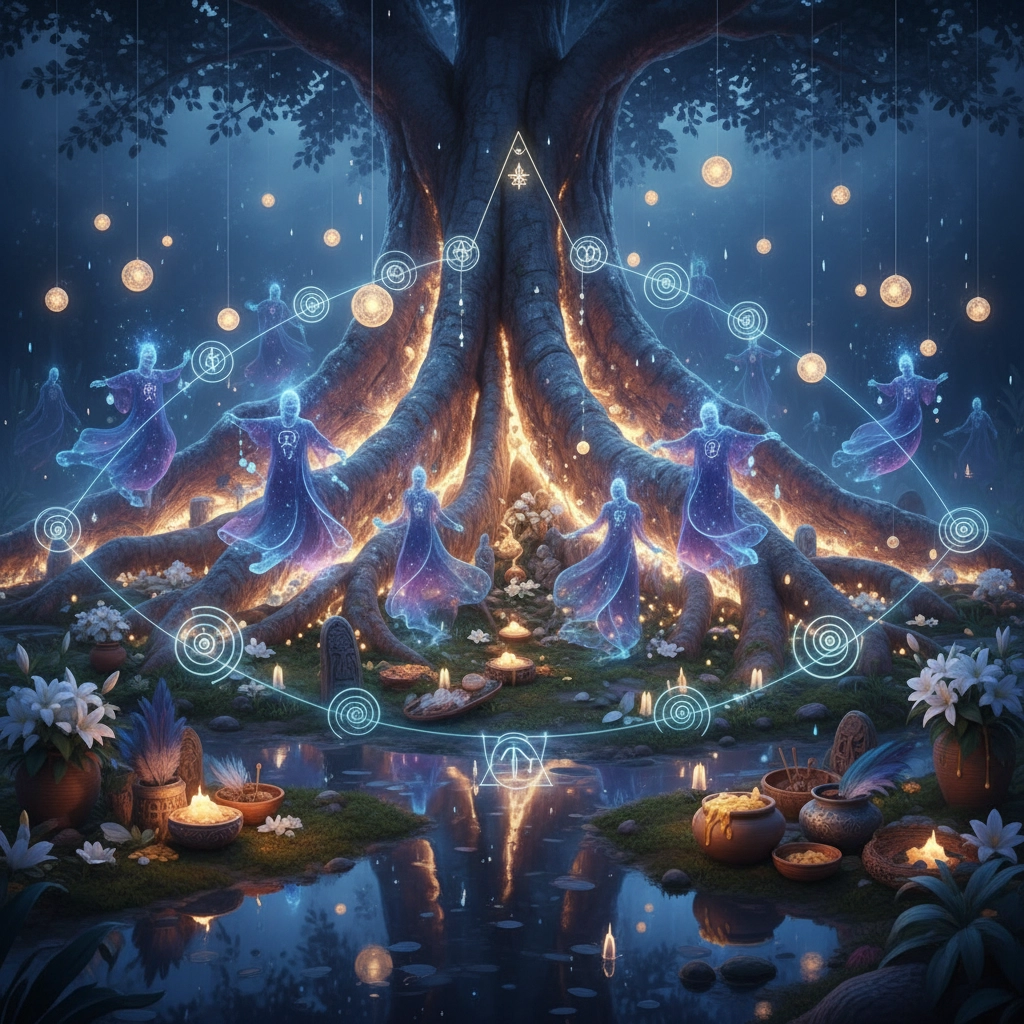
Ancestral Communication: When you need to reach your ancestors for serious guidance: not just everyday check-ins: Aragba provides the strongest connection. The tree amplifies your prayers and makes your voice clearer in the spirit realm.
Sacred Grove Creation: Multiple Ceiba trees create powerful sacred groves where entire communities can gather for ceremonies, healing work, and collective spiritual practices.
Proverbs and Sacred Lore
Our oral tradition is rich with wisdom about Aragba. Here are some proverbs that capture the tree's spiritual essence:
"Aragba ni igi agba" – "The Ceiba is the elder tree." This reminds us that some forces in nature command automatic respect.
"Ti a ba fe ri orun, a gbodo wo Aragba" – "If you want to see heaven, you must look through the Ceiba." The tree serves as a window to higher realms.
There's also the story of the first babalawo who received his training sitting under an Aragba for seven years. The tree itself became his teacher, showing him through its seasonal changes how to read the patterns of life, death, and rebirth.
Another powerful piece of lore tells us that when an Aragba falls naturally (not cut down by humans), it creates a portal that stays open for 40 days. During this time, the spiritual activity in the area intensifies dramatically.
Working with Aragba: A Respectful Approach
If you're called to work with Aragba energy, here's how to do it right:
Start with Permission: Never approach any sacred tree without asking permission first. Stand at a respectful distance, introduce yourself, explain why you're there, and wait for a sign that you're welcome.
Bring Appropriate Offerings: White flowers, honey, clean water, or white cloth are always appropriate. Avoid anything synthetic or disrespectful.
Learn the Tree's History: If possible, find out the history of the specific tree. Some Aragba have been serving as spiritual centers for hundreds of years and carry the energy of countless ceremonies.
Don't Take Without Giving: If you're asking the tree for spiritual assistance, healing, or guidance, always give something in return. This maintains the reciprocal relationship that keeps the spiritual ecosystem healthy.
Respect the Community: Many Aragba trees are central to local spiritual communities. Don't show up thinking you can claim the space or change established protocols.
Connection to Broader African Traditions
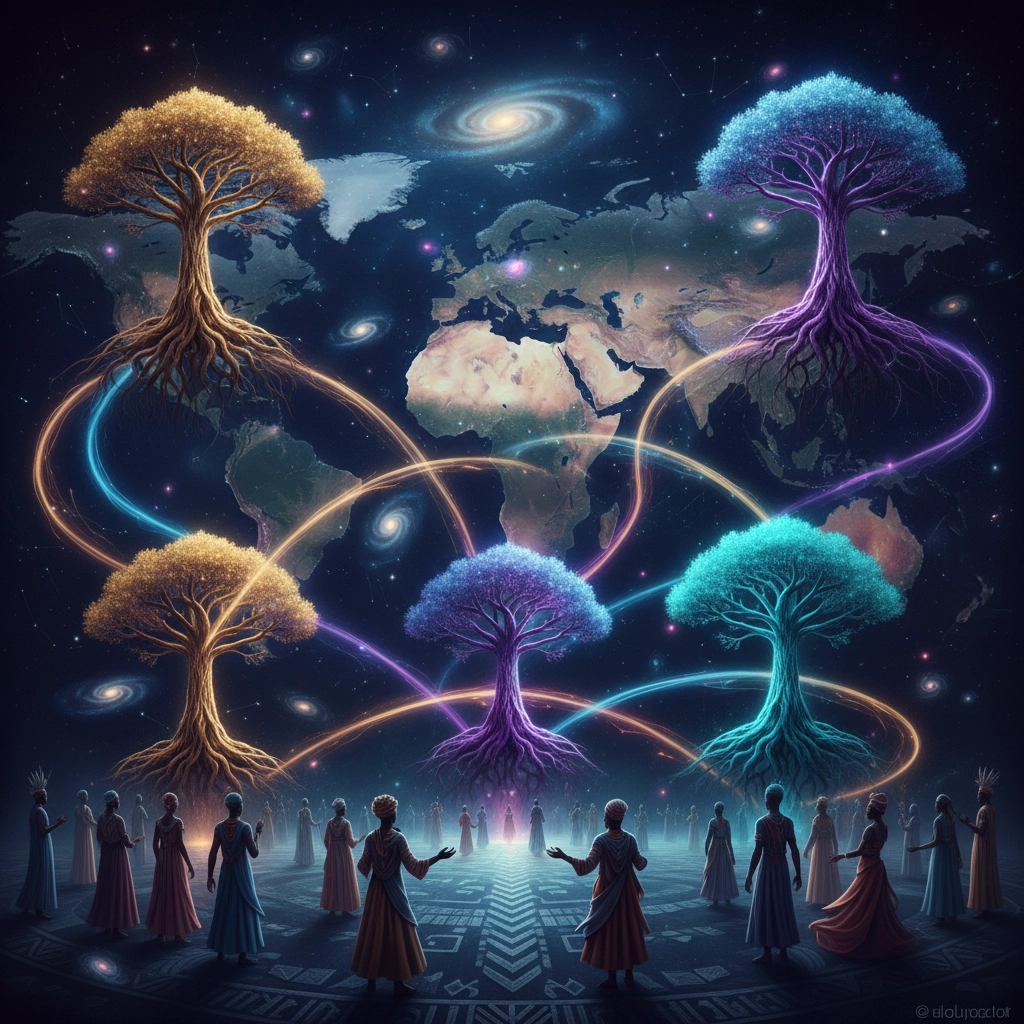
Here's what makes this even more beautiful: reverence for the Ceiba tree isn't just a Yoruba thing. Across West and Central Africa, these massive trees serve similar spiritual functions. In some regions, they're called "palaver trees" because important community decisions are made beneath their branches.
The spiritual significance of Aragba traveled with enslaved Africans throughout the diaspora. In places like Cuba, Haiti, and Brazil, you'll find Ceiba trees at the center of African-derived spiritual practices. The tree became a symbol of cultural continuity and spiritual resistance.
Even today, when practitioners of traditional African religions establish new communities in different countries, planting or finding a Ceiba tree often becomes a priority for creating sacred space.
Your Call to Action
Understanding Aragba isn't just about adding another tree to your spiritual vocabulary. It's about recognizing the profound wisdom our ancestors embedded in their relationship with the natural world. These weren't primitive people worshipping random plants: they were sophisticated spiritual scientists who understood energy, frequency, and the interconnectedness of all life.
If you're serious about deepening your spiritual practice, consider how you relate to the natural world around you. You don't need to live near a Ceiba to benefit from Aragba consciousness. You can cultivate the same reverence for whatever trees are in your environment.
Start paying attention to the trees in your neighborhood. Which ones feel different when you approach them? Which ones seem to hold older energy? Begin building relationships with these natural allies, and you'll start to understand what our ancestors knew about the spiritual power of the plant kingdom.
Remember, every tradition-keeper started as a curious seeker. Your questions about Aragba and other sacred practices are welcome here at the Ejiogbe IFA Institute. We're building a community where ancient wisdom meets modern understanding, where respect for tradition guides us toward practical spiritual solutions.
The next time you see a massive tree: whether it's Aragba or any other ancient giant: take a moment to really see it. These living ancestors have stories to tell, wisdom to share, and energy to offer. All they ask in return is our respect and recognition of the sacred relationship between human and nature that keeps both our worlds in balance.