
Here's the thing nobody wants to talk about: the whole "divination is demonic" conversation is way more complicated than your Sunday school teacher let on. And if you're sitting at the crossroads between your ancestral traditions and your faith, feeling torn between what your grandmother taught you and what the pastor preaches, you're not alone in this struggle.
Let's get real about divination in the Bible versus African Traditional Religion (ATR). Because the truth? It's not as black and white as folks want to make it seem.
What the Bible Actually Says About Divination
The Bible doesn't mess around when it comes to divination. Deuteronomy 18:10-12 lays it out plain: "Let no one be found among you who sacrifices his son or daughter in the fire, practices divination or conjury, interprets omens, practices sorcery, casts spells, consults a medium or spiritist, or inquires of the dead. For whoever does these things is detestable to the LORD."
Strong words, right? The Hebrew word qesem (divination) gets thrown around with witchcraft, and the penalties were severe, we're talking death by stoning level serious. From the Biblical perspective, divination represents trying to bypass God's authority and seek supernatural knowledge from sources other than the Creator himself.
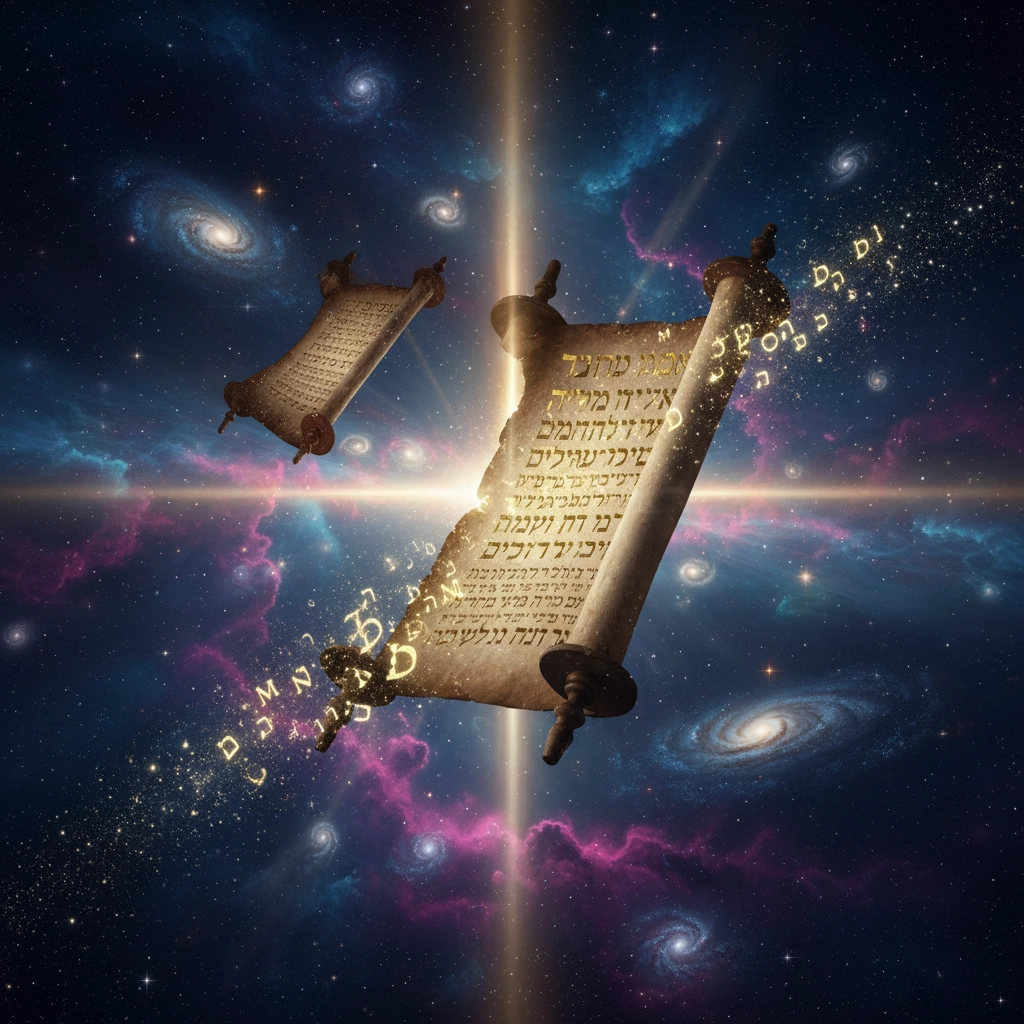
Ezekiel 13:6-7 calls out false prophets who engage in divination, saying they "see false visions and speak lying divinations" while claiming to speak for God. The fundamental issue here is spiritual allegiance, where you're getting your information from matters more than the information itself.
But here's where it gets interesting…
The Plot Twist: God-Approved Divination in Scripture
Hold up. Before you start thinking the Bible completely shuts down all forms of supernatural guidance, let me blow your mind with this: the same scriptures that condemn divination also describe divinely sanctioned forms of what looks suspiciously like… divination.
The Urim and Thummim were literally sacred divination tools used by priests to determine God's will. Casting lots shows up everywhere: choosing Matthias as an apostle (Acts 1:26), selecting Saul as king, determining the scapegoat in Leviticus 16:8-10. Divine dreams were a regular communication method between God and his people.
What's the difference? The source. When it comes from God through his prescribed channels, it's prophecy. When it comes from anywhere else, it's divination. Same mechanism, different spiritual pipeline.
This is where things get messy for those of us trying to figure out where our ancestral practices fit.
The ATR Perspective: A Different Lens Entirely
African Traditional Religion approaches divination from a completely different worldview. For centuries, these practices have provided comfort, guidance, and healing for our communities. From this perspective, the wholesale condemnation of ATR practices as demonic isn't just wrong: it's culturally destructive.

When you consult the cowrie shells, throw the bones, or seek guidance through Ifá divination, you're not necessarily trying to bypass the Creator. You're engaging with a spiritual system that recognizes multiple layers of divine communication: ancestors, orishas, and spiritual guides who serve as intermediaries in the divine hierarchy.
The problem comes when we try to judge one system by another system's rules. It's like trying to play chess using checkers rules: it doesn't work, and somebody's going to get frustrated.
The Similarities Nobody Talks About
Here's what's going to mess with your head: Biblical and ATR cosmologies have more in common than most people want to admit. Both systems feature:
- Hierarchies of spiritual beings with different roles and responsibilities
- Spirit possession as a legitimate spiritual phenomenon
- Moral complexity in the spiritual realm (not everything is purely good or evil)
- Divine messengers who deliver guidance and protection
- Spiritual warfare between different forces
Even the Biblical concept of "the Satan" in Hebrew scripture (like in Job 1:6-2:7) presents him as a functionary of the divine council, not an independent evil force. The moral ambiguity is right there in the text if you're willing to see it.
Research shows that the cosmology of the Bible and early Christianity is way more dynamic than we usually acknowledge. Demons and spirit possession in early Christianity contain many parallels with spirits and spirit possession in ATR.

Why This Matters for You Today
If you're struggling with this tension, you're dealing with more than just theological differences: you're navigating cultural trauma, colonization, and the systematic demonization of African spiritual practices.
The blanket categorization of ATR as demonic has done something twisted: it's actually elevated Satan as the most powerful divinity by attributing every African spiritual practice to him. Think about that for a minute. We've essentially given the devil credit for thousands of years of our ancestral wisdom.
Here's what I want you to consider:
- Your ancestors weren't demon-worshippers just because they didn't practice Christianity
- Spiritual practices that have sustained communities for millennia deserve more nuanced consideration than "it's all demonic"
- The Bible itself shows more complexity around spiritual communication than most churches teach
- You don't have to choose between honoring your ancestors and your faith: that's a false binary
Moving Beyond the Binary
The question "Is divination righteous or demonic?" assumes there are only two options. But what if the real question is: "What's the source, what's the intention, and what are the fruits?"
In my experience working with folks navigating this crossroads, I've seen people find peace by:
Examining the source: Are you seeking guidance that aligns with love, healing, and community well-being? Or are you trying to manipulate, control, or harm?
Checking your intentions: Are you approaching spiritual practices with respect, humility, and genuine seeking? Or are you treating it like a spiritual vending machine?
Looking at the fruits: Does this practice bring you closer to your highest self, your community, and divine love? Or does it leave you fearful, obsessed, or disconnected?
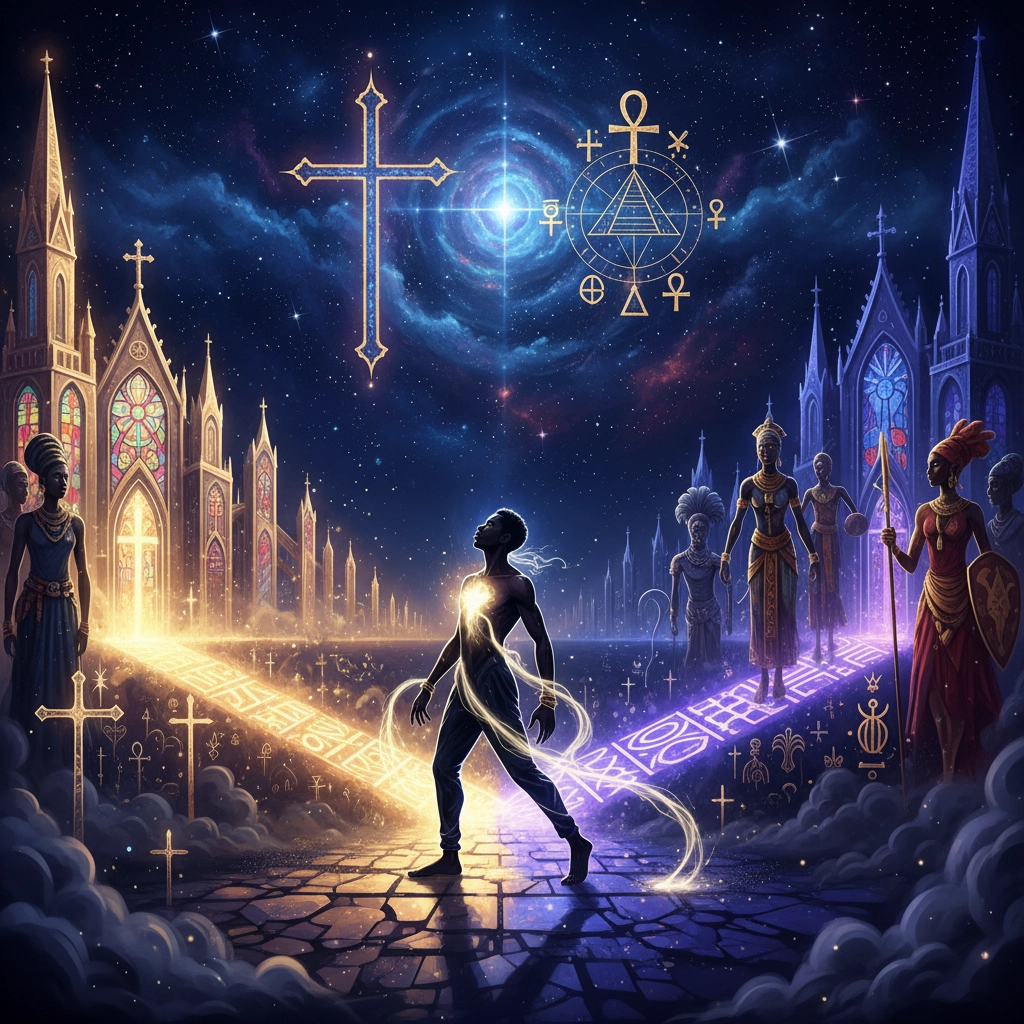
The answer isn't going to be the same for everyone. Your spiritual journey is yours to walk, and you have the right to seek divine guidance in ways that honor both your faith and your heritage.
The Bottom Line
Divination isn't inherently righteous or demonic: it's a spiritual technology that can be used for different purposes by different people with different intentions. The Bible condemns certain forms while practicing others. ATR embraces it as part of a holistic spiritual system.
You get to decide what serves your highest good and deepest truth. You get to honor your ancestors while maintaining your faith. You get to ask the hard questions without someone else's theological framework defining your spiritual reality.
Your relationship with the divine is bigger than any single tradition's interpretation. Trust yourself. Trust your discernment. Trust that the Creator who made you also made your ancestors, and their wisdom isn't automatically demonic just because it doesn't fit someone else's religious box.
The conversation isn't over; it's just beginning. And you have a voice in it.