
Ever wondered what that ornate iron staff with birds and bells means when you see it in an Ifá priest's hands? That's the Opa Osun, and if you carry certain Yoruba names or feel drawn to Ifá wisdom, this sacred scepter might be speaking directly to your spiritual path.
Let's talk about this powerful symbol that's way more than decorative ironwork, it's a living representation of spiritual authority, ancestral connection, and the delicate balance between seen and unseen forces.
What Exactly Is the Opa Osun?
The Opa Osun isn't just any ritual object. This wrought-iron staff serves as both a symbol of earned spiritual office and a direct altar to Orunmila, the orisha of divination and wisdom. When you see a babalawo (Ifá priest) carrying one, know that they've put in serious work to earn that level of spiritual authority.
Standing about 30 inches tall with a 10-inch diameter, the Opa Osun commands attention. But here's what makes it spiritually significant: it represents your personal fate, your ori, your destiny path, your spiritual blueprint. This isn't some generic blessing stick; it's intimately connected to who you are and where you're headed.
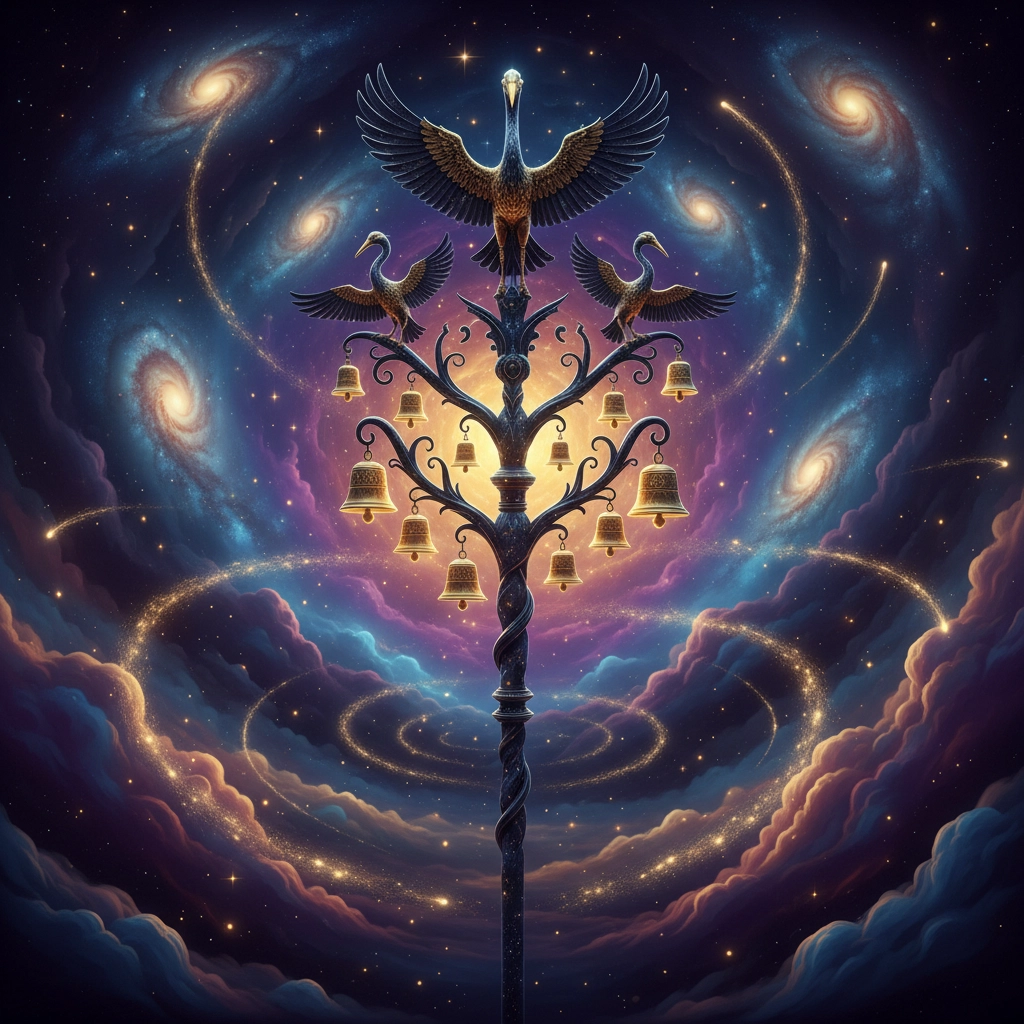
The most striking feature? Those birds. A central bird sits atop the staff, surrounded by smaller birds in an intricate dance of spiritual hierarchy. These aren't random decorative choices, every element carries deep meaning that connects to forces both protective and challenging in your life.
The Birds: Messengers of Balance
Here's where things get interesting. Those birds adorning the Opa Osun represent both good and bad forces circulating in the air. Yeah, you read that right: this isn't all light and love spirituality. The Opa Osun acknowledges that life comes with challenges, obstacles, and forces that don't always have your best interests at heart.
But here's the genius of it: the central bird acts as a spiritual conductor, bringing all these scattered forces: positive and negative: into orderly cooperation for your benefit. Think of it like this: instead of pretending bad energy doesn't exist, the Opa Osun works with the full spectrum of spiritual forces to create harmony.
Birds were chosen specifically because they always lead with their heads, moving forward. They represent spiritual navigation, the ability to rise above earthly concerns while staying connected to what's happening below.
The Bells That Call Blessings
Those jingling sounds you hear? They're not just pretty noise. The bells attached to the Opa Osun are designed to invoke the blessings of Ifá during ceremonies and daily spiritual work. Every ring is a call to the ancestors, the orisha, and the spiritual forces that guide your path.
When an Ifá priest walks with their Opa Osun, that gentle jingling announces their presence to both the physical and spiritual worlds. It's like carrying a constant prayer, a mobile altar that keeps the connection to divine guidance active wherever they go.
Names That Carry Power
Now, if your name includes Osun, Amore, or similar variations, pay attention. These names aren't coincidences: they're spiritual indicators pointing to your connection with the energy represented by the Opa Osun.
The name Osun itself connects to the concept of consciousness protection, spiritual awareness, and the divine feminine energy that guards wisdom. If you carry this name, it suggests your spiritual path involves serving as a bridge between worlds, helping others navigate their spiritual journeys.
Don't confuse the Opa Osun with other ritual objects: this is specifically "that which never sleeps." Your name might be telling you something about your role as a spiritual guardian, someone whose consciousness stays alert to spiritual movements and changes.
The Rule That Never Breaks
Here's something non-negotiable: the Opa Osun must never be kept horizontal. Ever. Whether it's in your home or outside, this sacred staff stays upright, standing at attention like a spiritual sentinel.
This isn't just tradition for tradition's sake. The vertical position represents constant vigilance, spiritual alertness, and your connection to divine guidance remaining active. When the Opa Osun lies down, it symbolically represents spiritual death, disconnection from your purpose, or disruption of your fate.
If someone wishes you ill, one of the worst things they could do spiritually is attempt to lay your Opa Osun flat. It's like cutting your spiritual phone line to the ancestors and orisha.
Honoring the Iyami
Those bird figures at the top? They pay homage to the Iyami: the Mothers of the Night, the ancestral feminine powers that govern spiritual mysteries and transformation. This is where the Opa Osun gets real about spiritual balance.
The Iyami aren't just benevolent grandmother spirits. They represent the raw, unfiltered feminine power that can both create and destroy, heal and challenge, protect and test. The Opa Osun acknowledges this complexity, honoring forces that demand respect rather than casual spiritual bypassing.
Working with the energy of the Opa Osun means accepting that spiritual growth involves facing uncomfortable truths, dealing with spiritual opposition, and learning to work with forces that might challenge you for your own development.
Modern Spiritual Authority
In today's spiritual landscape filled with weekend workshop certificates and social media gurus, the Opa Osun represents something different: earned spiritual authority. You don't just buy one online and start calling yourself an Ifá priest.
The person carrying an Opa Osun has typically undergone years of training, initiation, and spiritual development. They've faced spiritual tests, learned to work with challenging energies, and demonstrated the wisdom necessary to guide others safely through their spiritual journeys.
This doesn't mean you need to become an Ifá priest to benefit from understanding the Opa Osun's wisdom. But it does mean approaching these concepts with the respect and seriousness they deserve.
Ritual Function and Initiation
During Ifá initiation ceremonies, the Opa Osun plays a crucial role in the Ibo Osun ritual. Sacrifices are made at the staff to honor what are called the Ajoguns: the spirits of disturbance including Death, Illness, Loss, Litigation, and Conflict.
This isn't about appeasing evil spirits. It's about acknowledging that these challenging forces exist and learning to work with them constructively. The ritual aims to transform potential obstacles into allies that support your spiritual growth rather than derail it.
Your Connection to This Wisdom
Whether you carry a name connected to Osun energy or simply feel drawn to these teachings, the Opa Osun offers practical spiritual guidance for modern life:
Stay upright in your principles. Like the staff that never lies down, maintain your spiritual integrity even when life gets challenging.
Work with all forces, not just the comfortable ones. Spiritual maturity means learning to navigate both supportive and challenging energies with wisdom.
Respect earned authority. Seek guidance from those who've done the work, not just those who talk a good game on social media.
Keep your spiritual alertness active. The "never sleeps" aspect reminds you to stay conscious of spiritual movements and changes in your environment.
The Opa Osun isn't just an ancient artifact: it's a living symbol of spiritual principles that remain relevant for anyone serious about their spiritual development. It challenges you to move beyond surface-level spirituality into the deeper, sometimes uncomfortable work of real spiritual growth.
Ready to explore how these ancient principles apply to your modern spiritual journey? The wisdom of the Opa Osun is available to guide you, but like everything powerful in the spiritual realm, it demands respect, understanding, and genuine commitment to growth.