We're living through a strange paradox: we have more information at our fingertips than any generation in history, yet we're forgetting more than ever. Digital amnesia: the phenomenon of outsourcing our memories to devices: isn't just about forgotten phone numbers or anniversaries. For communities rooted in oral tradition, it's an existential crisis. When cultural wisdom isn't written down, and elders aren't recorded, entire lineages of knowledge can vanish in a single generation.
But here's the twist: the same technology that enables forgetting can also become the infrastructure for remembering. The question isn't whether we use digital tools to preserve ancestral voices: it's how we do it. And that "how" makes all the difference between building a bridge and installing a filter.
The Filter Problem: When Translation Dilutes Meaning

Traditional translation approaches treat language like a math equation: input one word, output its equivalent, preserve grammar, call it done. This works fine for ordering coffee in another country. It fails spectacularly when you're dealing with prayers, proverbs, and teachings that carry centuries of nuance.
Consider a Yoruba teaching about balance and destiny. The word "ori" doesn't simply mean "head": it encompasses consciousness, spiritual destiny, and personal divinity. Run that through a conventional translation engine and you get "head" or maybe "mind" if you're lucky. The spiritual architecture? Gone. The ancestral understanding? Filtered out.
This is what we mean by translation as a filter: it removes the "impurities" (read: the soul) to deliver something clean, simple, and ultimately hollow. You get words without wisdom. Translations without transformation. It's like trying to explain a symphony by listing the notes.
The Bridge Approach: Preserving the Soul of Meaning
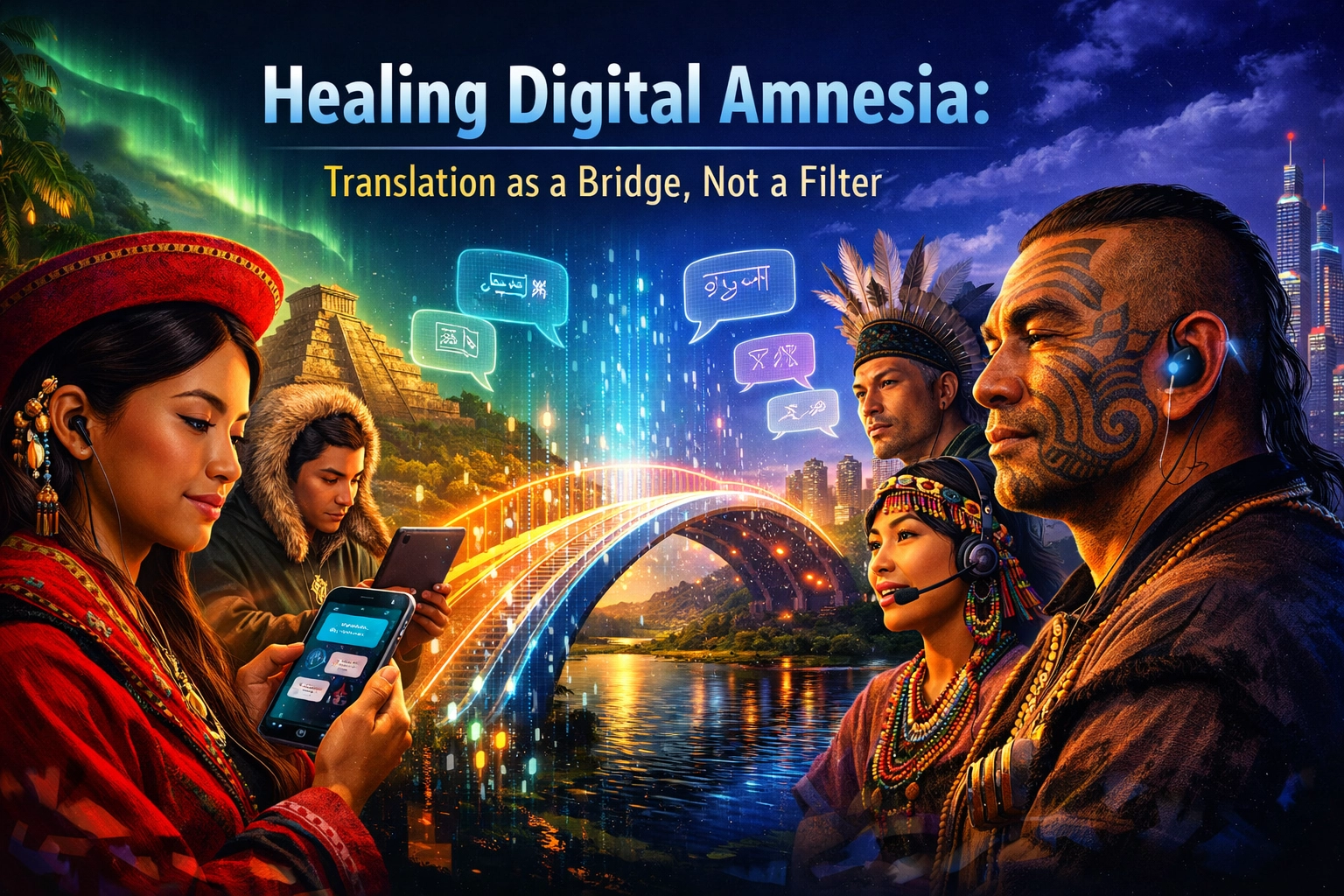
A bridge doesn't change what crosses it: it simply makes the crossing possible. This is the philosophy behind translation within the Ejiogbe Voices platform. We're not trying to convert cultural wisdom into something more palatable or accessible by stripping away its complexity. We're creating pathways that allow that wisdom to travel intact across linguistic boundaries.
Here's how this works in practice:
Context-Aware Translation: Our system doesn't just translate words: it understands cultural context. When an elder shares a teaching about spiritual guidance, the translation preserves the ceremonial weight of the language. Technical terms stay technical. Sacred terms stay sacred. The architecture of meaning remains standing.
Layered Understanding: Rather than forcing a single "correct" translation, we embrace multiplicity. A word might have a direct translation, a contextual explanation, and a cultural annotation: all accessible to learners. You're not told what something means. You're shown how it means, in layers of increasing depth.
Voice Preservation: Translation happens alongside the original voice, never instead of it. Hearing an elder speak in their native language while accessing translation creates a fundamentally different learning experience than simply reading translated text. The rhythm, the pauses, the emotional tenor: these carry meaning that no written translation can fully capture.

Digital Amnesia Meets Digital Remembering
The irony isn't lost on us: we're using the very technology that contributes to cultural forgetting to create permanent, accessible records of oral wisdom. But this isn't about fighting technology: it's about redirecting it.
Digital amnesia happens when we outsource memory without creating meaningful engagement. You don't remember your friend's phone number because you never actually learned it: you just stored it. The same can happen with cultural knowledge if we're not careful. A recorded teaching that sits unwatched in an archive is just another forgotten phone number.
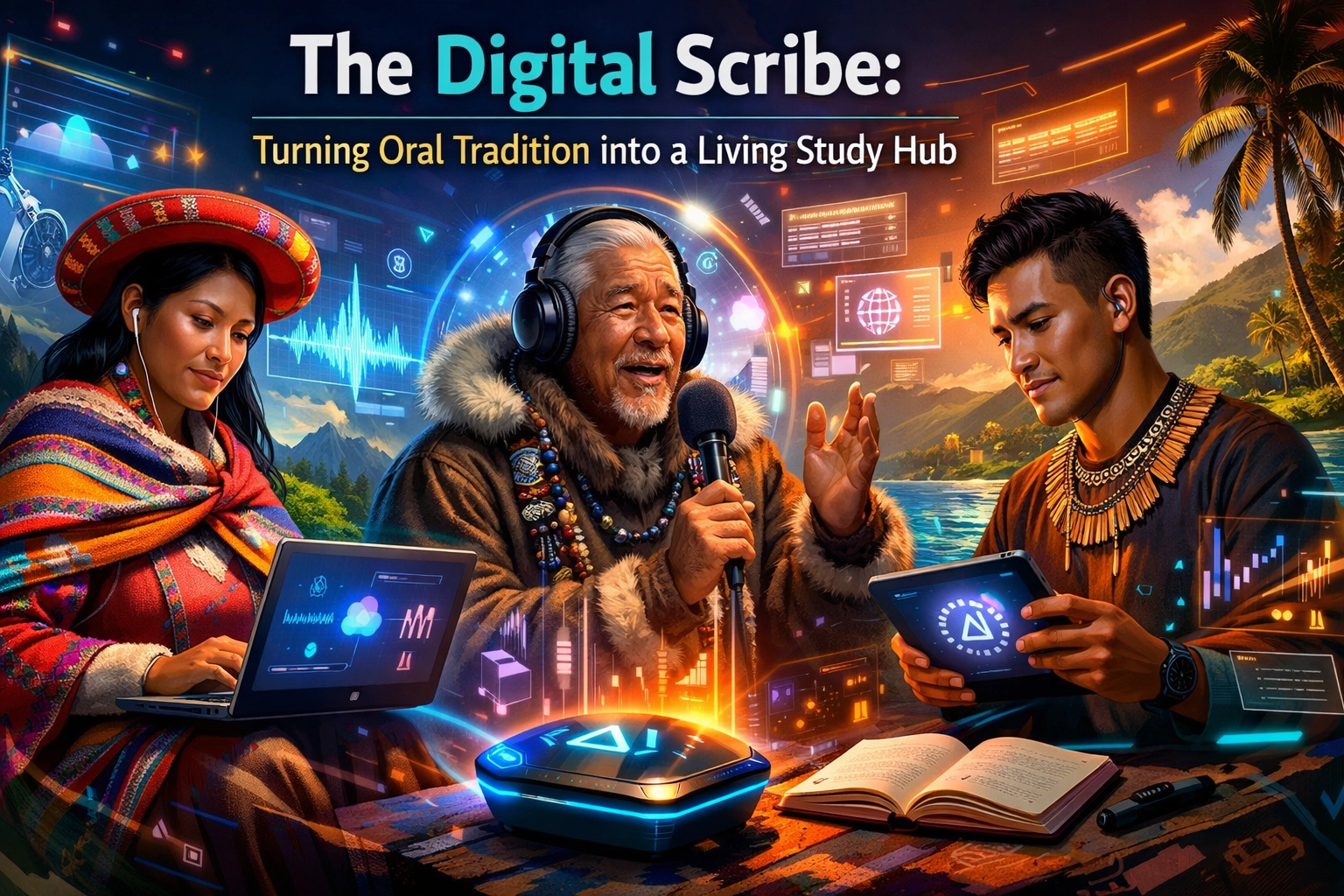
This is why our platform emphasizes active learning alongside preservation. The AI Learning Lab doesn't just translate and transcribe: it creates dynamic study environments where learners engage with teachings through questions, contextual notes, and interconnected wisdom. You're not passively consuming translated content. You're actively building understanding.
The Technical Soul: How We Build Bridges

Let's get practical. How does translation actually function as a bridge within our platform?
Real-Time Transcription with Cultural Intelligence: When an elder records a teaching, our system transcribes it in the original language first. This isn't just speech-to-text: it's speech-to-meaning, preserving pronunciation guides, tonal markers, and cultural context clues that would be lost in direct translation.
Multi-Modal Translation: Text translation runs parallel to the original audio, not in replacement of it. Learners can toggle between original language, translated text, and contextual annotations. Each layer adds understanding without replacing the source.
Community-Verified Accuracy: Automated translation serves as a foundation, not a final product. Contributors and cultural practitioners review translations to ensure they honor the spirit of the teaching. This human-in-the-loop approach catches nuances that algorithms miss.
Dynamic Dictionaries: Our system builds living dictionaries that evolve with usage. When a word appears in multiple contexts: ceremonial, conversational, instructional: those contexts are mapped and accessible. You don't just learn that "ashe" means "power." You learn how it means power, when it means power, and why it matters.
From Forgetting to Remembering: The Impact
The bridge approach to translation creates tangible outcomes for communities working to preserve and transmit cultural knowledge:
Elders Share More Freely: When translation is handled respectfully and accurately, elders feel safer sharing sensitive or complex teachings. They're not worried about their words being flattened or misrepresented. The platform becomes a trusted space for transmission.
Learners Go Deeper: Access to layered translations means learners can progress from basic understanding to nuanced mastery. You might start with simple translations, then add cultural context, then study the original language itself. The bridge supports multiple levels of crossing.
Communities Stay Connected: Diaspora members separated from their ancestral languages can still access the wisdom. But they're not getting a diluted version: they're getting a supported pathway back to the source.
Knowledge Compounds: Every teaching added to the archive strengthens the entire system. Dictionaries grow richer. Contextual understanding deepens. The platform becomes more intelligent about cultural nuance with each contribution.

The Phoenix Principle: Rising from Digital Ashes
There's a reason we invoke Fenix imagery throughout this work. The phoenix doesn't just survive fire: it's reborn from it, transformed but fundamentally itself. This is our aspiration for oral traditions in the digital age.
Digital amnesia has burned through countless hours of unrecorded wisdom. Languages have faded. Teachings have been forgotten. But from those ashes, we can build something that honors what came before while ensuring it continues forward. Not by changing what oral wisdom is, but by creating new infrastructure for how it travels.
Translation, done right, is that infrastructure. It's the bridge that allows a grandmother in Nigeria to teach her granddaughter in New York. It's the pathway that lets a ceremonial practice in Brazil inform scholarly work in London. It's the connective tissue that turns isolated pockets of knowledge into a living, breathing ecosystem of wisdom.
Building Your Bridge
The work of healing digital amnesia isn't abstract: it's practical, ongoing, and collaborative. Every teaching recorded, every translation verified, every learner engaged adds strength to the bridge we're building together.
If you're an elder with wisdom to share, know that your voice will be preserved with dignity and context intact. If you're a learner seeking connection to your roots, know that you'll find pathways, not barriers. If you're a community leader working to safeguard heritage, know that these tools are built for you, with you.
Explore our archive to see how translation serves preservation in practice. Review our guidelines to understand how we maintain cultural integrity throughout the process. Join our community of contributors working to ensure that ancestral voices continue speaking to future generations.
The digital age doesn't have to mean digital forgetting. With the right approach: translation as bridge, not filter: we can build infrastructure for remembering that honors the past while empowering the future.
Because ultimately, healing digital amnesia isn't about better memory. It's about deeper connection. And that's exactly what a bridge is built to provide.